

10 Things Your Mom And Dad Didn’t Tell You – But Wish They Did!
There are a million things you learn about life when you become a parent, and nothing but parenthood could ever prepare you for them. 10 Parents’ Secrets: Your mom and dad went through the same things and omitted to tell you a whole bunch of stuff to avoid burdening you, but sometimes wish they shared their experience if for no other reason than to prepare you for what awaits down the road.
They knew very well that one day you’d grow up, live your own life, find love (online, since it’s the 21st century) like they did, and get to experience the most extraordinary thing in the world – being a parent. Today we look at the top 10 things your parents kept to themselves because you had to see them for yourself.
#1: They Shed Tears for Your Countless Times
They cried when you first saw the light of day. When you took your first step or said your first word, they shed tears. On your first day of school, your first violin recital, your high school or college graduation, your wedding day and every small and big milestone in between brought them to tears whether you saw it or not.
#2: They Made Great Sacrifices
From the moment you were born your parents started making sacrifices – from sleepless nights when you were a baby to having to miss their friends’ birthdays or outings because you were ill. As you grew up, their careers, vacations, and any minor or major plans probably had you at the center, and every decision they’ve ever made put your needs first. Your dad probably wanted that last piece of cake but gave it to you. In all likelihood, they never complained about any of it once.
#3: They Were Constantly Worried About You
Their full-time job was to make sure you were alright and luckily grew up into a happy and successful person. Life is full of traps around every corner and although your parents did their best to teach you to avoid them, they constantly worried about you.
#4: They Watched You As You Slept
Your parents spent countless nights begging you to ‘please, please fall asleep’ because they couldn’t keep their eyes open anymore. And once you’d finally fall asleep, they’d stay by your bedside and watch your cute face, forgetting their aching arms or back, and all the fatigue they were feeling just a moment ago would disappear.
#5: You Caused Them Pain, but They Love You Anyway
Aside from the fact that children can be egocentric and hurtful towards their parents at any moment in their lives, every child caused its mother pain at childbirth, which is arguably the largest degree of pain a human being can endure. And she loves you anyways! And would do it all over again!
#6: They’re Not Perfect
One of the first signs a child has grown up is when they realize their parents aren’t perfect. You as a child perhaps remember that moment even though your parents might have absolutely no clue when it happened. And no, no parents are perfect, but they are strong for their children. You’re bound to repeat that cycle when you have kids of your own – everyone makes mistakes, but we all have to be tough for our children.
#7: They Love To Just Look At You
‘Unless you have a daughter, you’ll never get to kiss the most beautiful girl in the world’ said a wise man once. Your parents created you, you’re a little him and her, their pride and joy, and they’ve never quite loved anyone the way they love you. Just looking at you gives them great joy.
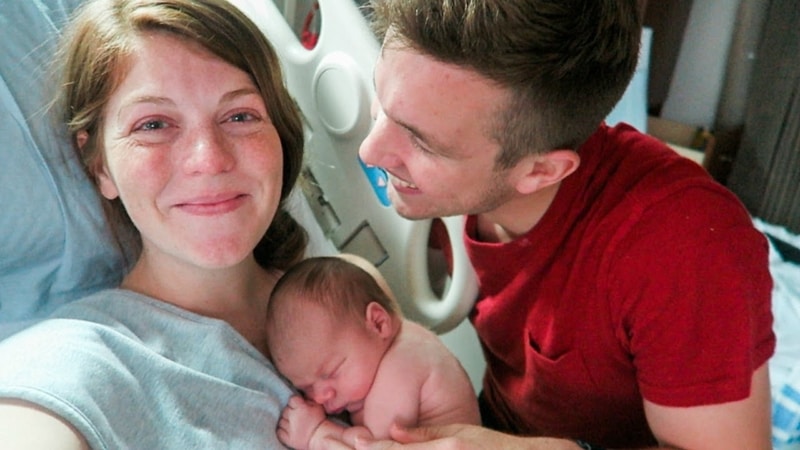
#8: They Hated To See You Cry
Every time you fell and hit your head, your parents felt your pain as well. They hated to see you cry for no reason other than they just wanted you to be as happy as you could be. Every time you felt pain, they were right there with you, and shed those tears we’ve discussed already, whether you knew it or not. If they could take away your pain and carry it themselves, they would, but they couldn’t which left them feeling helpless and like they were the worst parents in the world.
#9: Letting You Go Was a Terrible Loss
When you left for college, to join the army, to live on your own, or to move to another country, they hated to see you go. It left a huge hole in their lives that couldn’t quite be filled ever again, but at the same time when you left to live your own life, they knew they did their job right.
#10: They Would Do It All Again in a Heartbeat
Being a parent is the hardest thing anyone has ever had to do. It’s a full-time job that never stops, there are no breaks or vacations, and there is certainly no retirement. And despite all the sacrifice, pain and tears, sleepless nights, missed personal opportunities or their wishes that couldn’t come true because of you, they’d do it all over again in a heartbeat. And why wouldn’t they? You’re the best thing that ever happened to them.

Learn About Current And Future Family Types And Dynamics
Family types and dynamics are shifting as traditional roles evolve to match modern values and lifestyles. From platonic families to business-oriented partnerships, these emerging structures emphasize individuality, mutual support, and flexibility. Understanding these changes offers insight into how families adapt to meet personal goals and navigate an ever-changing social landscape.
The model of today’s family is becoming obsolete, and this is a natural process. Not so long ago, an urban family of spouses with a couple of children replaced families of several generations coexisting under the same roof with the many children. Parents worked to be breadwinners, helping offsprings on their way in life. However, the mission of this outdated kind of families is no longer appeals to the new generation.
What Are The Possible Variants Of Family Types?
Due to the changes in values, the main goals for the young are to achieve success and have the ability to manage their own time. So what are the possible variants of the families in the next years?
Free relationships or say ‘yes’ to no commitment
This type of family is already established in the lives of many people. After a couple of years of being married, there might be no sparks and passion. So to rekindle those feelings and sensuality, some of us sometimes need to seek another partner.
Platonic family – Family Types And Dynamics
This term also called ‘co-parenting’ addresses to the relationships without attachment, phrases of love and sexual involvement. The reasons for partners of this type of family are the following:
- To raise a child. It can be good friends or two people who are not able to bear children.
- The establishment of an LGBT relationship. It applies to LGBT people, who decide to get together and build a family that is opposite to the traditional heterosexual one.
In some countries, like Canada and the UK, platonic families are mentioned in the laws and approve it, but with another term ‘conjugal partners’. They allow so-called parents to live in different houses, yet share a mutual child.
Platonic families are more and more being recognized as forms of diversely and intentionally arranged families bound together by shared visions rather than by romantic bonds. Many aim at co-parenting, providing for the family in a nurturing environment not characterized by romance or anything sexual. To many, this stability brings about flexibility, especially for friends or others who can’t have children themselves biologically.
This Has Been Embraced By Many LGBTQ+ People
Platonic families have increasingly been embraced by LGBTQ+ individuals as a meaningful way of building connections that are compatible with their values and lifestyles. Such partnerships represent a challenge to traditional heteronormative standards that promote inclusivity and the redefinition of family structures.
Legal systems in countries like Canada and the UK acknowledge platonic families under terms like “conjugal partners.” This recognition allows co-parents to share responsibilities while living independently. The arrangement suits people who want independence but place a high value on shared parenting duties.
Platonic families signify a progressive relationship, in which collaboration, respect, and mutual support become the emphases rather than conventional romantic expectations, especially as societal values evolve.
Single-parent family – Family Types And Dynamics
There are many single-parent families today. In some countries, their number is comparable to the number of nuclear families. For example, in the UK this is a quarter of all families. In Canada, the number of such units has increased in the past few years, and they mainly involve males.
The further, the more single-parents families will appear with a male parent and one or two children. The technology will play a crucial role in this process – artificial insemination, conceiving, and surrogate gestation.
People who want to continue their line, both men and women, will be able to accomplish it without a partner in this case. Despite some difficulties, such a family is sometimes better than a nuclear family, in which there is no agreement between parents. Besides, you do not have to be consistent in terms of your relationships and see different people every day.
Single-parent families are becoming an integral part of modern society. According to the records, in many countries, this proportion is increasing rapidly. One-quarter of all families are one-parent families in the UK and in Canada, it is growing, out of which many are headed by the male parent.
Advancements Have Made It Possible For Single Parents To Have A Child
The technological change also furthers this trend. Artificial insemination, surrogate births, and other concepts of reproducing have made it possible for people to reproduce on their own and avoid partnering with another person altogether. This appeals to people who value independence but still wish to experience parenthood.
Single-parent families normally show more stability than nuclear families full of conflicts. They allow the parents to focus solely on the well-being of their children, free from the pressure of incompatible relationships. It also eliminates the problems of maintaining consistency in relationships while parenting.
Single-parent families reflect and project, with the shifting time and society, the growing desire for independence, control, and intentional parenting, thus it becomes one of the increasingly popularly accepted and valued models of family.
Business families – Family Types And Dynamics
Although the family today is losing its economic function, in the future it is likely to strengthen particularly. Small family businesses that promote themselves through social networks are already well visible. Today’s most popular co-activities are:
- food production
- participation in crafts
- establishment of family schools
- organization of seminars and webinars
- organization of a workshop
Currently, this takes place a bit haphazardly. However, in the future, couples will probably be created based on professional compatibility for profitable production.
Besides, business couples will hand on their children to professional or ‘graduated’ families to bring up their children. Members of such a family will have functions that complement each other: teacher, psychologist, and cook. Most likely, professional families will consist of several adults rather than actual beloved partners. This system will reduce the number of abandoned children, as well as give parents who do not like the process of raising children the opportunity for an alternative approach to live their life.
This Is Based on Collaboration And Mutual Ambitions
Business families reflect an innovative approach to the relationship between personal and professional goals, effectively blending family and work life into one. They are mainly based on collaboration and productivity, forging partnerships that thrive on common skills and mutual ambitions more than romantic bonds.
In the future, such partnerships may be based on well-matched professional compatibility, where relationships would be formed with the aim of economic growth and mutual success. Such families could focus on core activities related to digital marketing, technology innovation, and sustainable production, each member bringing their own expertise.
To ensure holistic child-rearing, business families may entrust their children to specialized caregiving communities or ‘graduated’ families. These groups, comprising professionals like educators, therapists, and caregivers, provide comprehensive support, nurturing a well-rounded upbringing.
This model empowers individuals who value professional success over traditional parenting roles, offering a practical and mutually beneficial alternative. By redefining family structures, business families may reduce societal strain and create new opportunities for growth and stability.
Embracing Evolving Family Structures for a Progressive Future
It is hard to say whether these types of families are right or not since we have accustomed to the traditional unit system. Nevertheless, all these probable types of future representation of family will, in the first place, help to tolerate one-sex relationships. Secondly, breakups will no longer be like a thunderbolt, since the bonds will be free and open. You should not wait until this time comes, visit dating sites now and find your partner to spend your time with pleasure. Due to these events, people will eventually be focused on their goals and priorities in life to achieve success.
FAQs About Current and Future Family Types and Dynamics
- What are the key differences between traditional families and modern family types?
Traditional families often center around romantic bonds and shared parenting, while modern family types emphasize individuality, shared goals, and flexibility. - What is a platonic family, and how does it work?
Platonic families are non-romantic partnerships where individuals co-parent or build shared lives based on mutual goals, often without emotional or sexual involvement. - How is technology influencing the rise of single-parent families?
Advancements like artificial insemination and surrogacy empower individuals to become parents independently, bypassing the need for a traditional partner. - What is the concept of a business family?
Business families focus on professional compatibility and shared ambitions, blending personal relationships with economic growth and mutual productivity. - Why are modern family dynamics gaining legal recognition?
Societal shifts and inclusivity have led some countries, like Canada and the UK, to legally recognize diverse family structures, including platonic and co-parenting models. - How do evolving family structures impact societal values?
These structures promote acceptance, reduce stigmas around non-traditional families, and encourage individuals to prioritize personal growth and intentional relationships.
Morgan
Consultant At Oh Zone Caringbah
Reflecting on the evolving concept of family, I see endless possibilities for how we can redefine connection and commitment. Personally, I believe the beauty lies in embracing what works for each individual, without clinging to outdated norms. Families should be about mutual support, understanding, and shared goals—whether romantic, platonic, or professional. Change may feel unsettling, but it opens doors to meaningful growth. Let’s welcome these shifts with open minds and hearts, finding partners and families that align with our values. Life’s too short to settle for anything less than what truly fulfills us. – Morgan


Leave a Reply